
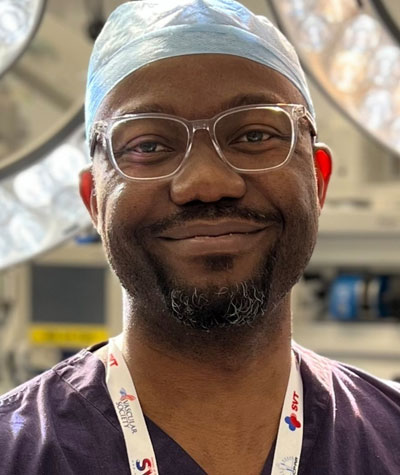
Dr Ibrahim Enemosah is driven by helping others. Since joining the Elected Council of the Vascular Society in October 2021, he has worked hard to reach out to other SAS doctors, encouraging them to draw on the support available from the Society.
It all started in August 2021 when Ibrahim spotted a national advert placed by the Vascular Society for SAS representatives. Ibrahim applied, and soon after, he was invited for an interview by a panel that included representatives from the Rouleaux Club (the UK and Ireland vascular trainees’ association). He also gave a five-minute presentation on how he would engage other SAS and LE doctors. Ibrahim was appointed to the new role, together with a colleague, Tatiana Martin.
Ibrahim’s primary role is to help SAS and LE doctors (such as clinical fellows) in vascular surgery to access training and education to enable them to progress. Together with Tatiana, he has been working to identify SAS and LE doctors working in vascular surgery. By early 2022, they had identified 32 such doctors working in the UK. They continued with their mission to contact all vascular network leads to ensure that no one had been missed, and by 2023 had reached 70 doctors.
Ibrahim and Tatiana are full members of the Elected Vascular Society Council and sit on the education and workforce committees. They ensure that the voices of SAS and LE doctors in vascular surgery are heard during Council discussions. They also identify mentors to support CESR applicants. “My role is to support them and help them get certification so that they can become consultants themselves,” says Ibrahim. He believes that 80% of SAS and LE doctors working in vascular surgery would like to become vascular specialists, adding, “I believe everyone would benefit from the educational support.”
Ibrahim emphasises the value of drawing doctors into collegiate structures in terms of combating loneliness and dissatisfaction due to a lack of support – and the knock-on benefits of happier doctors for service delivery. The support available includes providing access to courses and conferences, with educational content tailored to the needs of SAS and LE doctors. Without support, doctors who do not hold a national training number are more likely to leave the specialty.
Ibrahim is all too aware of the challenges SAS and LE doctors can face in accessing training and educational opportunities. “I experienced difficulty accessing training in the UK because the competition is so fierce. I applied for a training number three times but was unsuccessful as the wealth of my surgical experience counted against me. Colleagues, and the centre where I work, are now supporting me on the CESR route,” says Ibrahim. He has worked as a clinical fellow in the NHS for four and a half years; he completed a two-year fellowship in Plymouth before moving to Southampton for two and a half years as a Senior Vascular clinical fellow. He had seven year’s general surgical residency in Nigeria under his belt before coming to the UK to pursue his interest in vascular surgery. His long-term plan is to return to Nigeria and deploy his specialism to the benefit of developing communities. He says, “To complete my mission, I have to give back, which means providing vascular care to those who cannot afford or access it. That’s my end goal.”
“What SAS doctors need is support to unleash their full potential. If they do not receive this support, they receive criticism, feel unhappy and move on. Not many SAS doctors have a lot of experience in leadership roles, so they need support to thrive.”
Ibrahim is optimistic about the future of this workforce. He says, “The SAS role is more in focus now. As I am an insider, I can see there are a lot of things happening.” He observes that RCS England has recognised the need for change and raised awareness of the potential, and capabilities, of SAS doctors. Healthcare organisations and networks also play a crucial role, he says, in demonstrating the benefits of employing SAS doctors. “It is important for everyone involved to work together and make a concerted effort to break down the historical barriers that have limited the employment opportunities for SAS doctors,” he says.
Would you like to get involved with a specialty association or take on a College role?
Ibrahim’s advice for SAS and LE doctors wanting to get involved with one of the many specialty associations or surgical royal colleges:
- Engage with your specialty representative: send them an email highlighting your interests and asking how you can get involved.
- Ears to the ground: take advantage of networking opportunities at conferences and other events.
- Start locally: “Being a Chief Resident and supporting junior doctors in my trust enhanced my skill set for my national role,” says Ibrahim.
